Platform · Project Management
Structure the engagement your way — not a generic task board
Projects in ColabFlo aren’t a bolted-on Kanban board. They’re the spine that documents and quality events attach to in a Tech Transfer engagement. Structure work by stage, by your own work breakdown structure, or both.
What it does
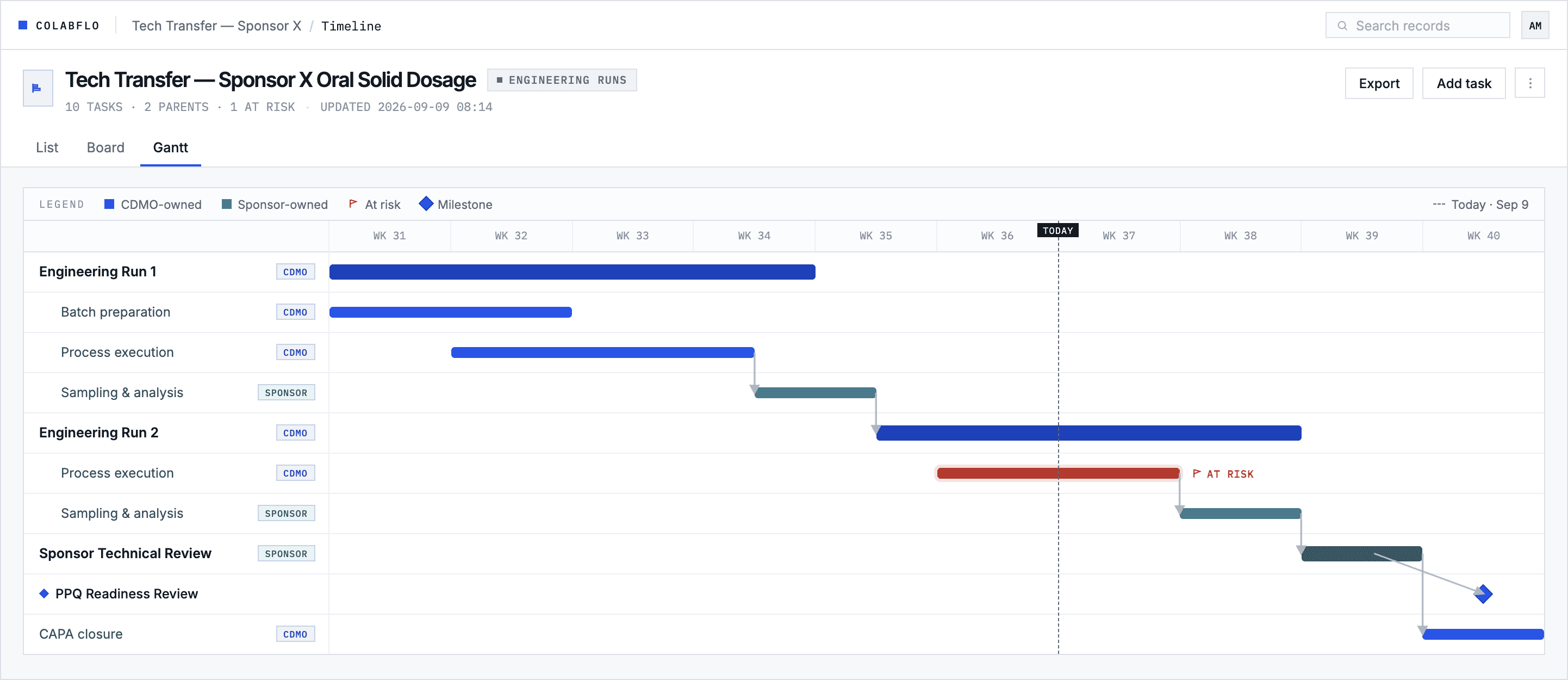
- Work breakdown structure with parent-child tasks and dependencies
- Milestones with at-risk alerts, not just due dates
- Gantt view with critical path analysis
- Cross-organization ownership — a CDMO task and a sponsor task sit on the same timeline
- Configurable project templates for repeatable engagement types
- Portfolio grouping across concurrent engagements
What’s configurable
Project statuses, task statuses, priority levels, custom fields, WBS structure, and templates — defined by your tenant administrators, the same way document types and quality event types are.
How it connects
Documents live inside the project. Quality events raised during execution reference the project and the exact task or document version involved. Reporting rolls status up from the same records — nothing to reconcile separately.
Compliance behaviors
Task and milestone state changes are captured in the same immutable audit trail as documents and quality events. Ownership changes and status transitions are attributable — who changed what, and when.
How is this different from a generic project tool?
Generic PM tools track tasks. They don’t carry the document lifecycle or quality event linkage on the same permission and audit model — a task, a document revision, and a deviation live in one object graph here, not three tools stitched together.